




Swimming in place sounds like a contradiction, but endless pools have turned this concept into a thriving fitness solution for homeowners, athletes, and rehabilitation specialists alike. If you have been researching ways to bring a serious swimming experience into a compact space, you have likely come across the Endless Pools brand and its growing list of competitors.
This guide cuts through the marketing noise to give you a straightforward breakdown of what endless pools actually cost, which features matter most, and how leading models compare against one another. Whether you are considering a self-contained swim spa unit or a full-size current system, understanding the differences between options can save you thousands of dollars and prevent buyer’s remorse.
By the time you finish reading, you will have a clear picture of pricing tiers, key specifications to evaluate, installation requirements, and worthy alternatives worth considering before you commit. This is not a casual purchase, and the decision deserves careful analysis. Let’s get into everything you need to know to make a confident, well-informed choice.
What Are Endless Pools and How Do They Work
Imagine swimming continuous laps without ever touching a wall, enjoying a full aquatic workout in a backyard space no larger than a hot tub footprint. That is precisely the appeal of endless pools, which use a counter-current system to generate a steady, opposing water flow that keeps swimmers moving in place. Rather than traversing back and forth across a lengthy lap pool, you simply swim against the current, adjusting the resistance to match your pace and fitness level. This concept resonates deeply with homeowners who want the physical and therapeutic benefits of a full-sized pool without the substantial space requirements, extended construction timelines, or ongoing maintenance demands that traditional inground pools typically involve.
At the heart of the most advanced endless pool units is Hydrodrive propeller-based technology, a proprietary system that sets these products apart from conventional jet-based swim spa designs. Rather than forcing water through narrow nozzles, Hydrodrive uses a precision-engineered propeller to produce a wide, deep, and remarkably smooth current. The result is a natural, turbulence-free swimming environment that supports proper stroke technique for competitive swimmers while remaining comfortable and accessible for beginners, walkers, or those pursuing aquatic rehabilitation. Speed settings are highly adjustable, accommodating everything from a gentle walking pace to a powerful training current favored by elite athletes.
That elite-level credibility is reinforced by a meaningful endorsement: Endless Pools holds official swim spa supplier status with USA Swimming and the U.S. Swim Team, a partnership extending through 2028 with planned activations at major championship events. For fitness-focused buyers, this alignment with the national governing body for competitive swimming signals genuine performance capability, not just marketing language.
Endless Pools product lines fall into four primary categories. The Swim Spa collection spans the R Series for recreation-focused families, the X Series for fitness-oriented users, and the premium E Series featuring full Hydrodrive technology, with starting prices ranging from approximately $25,000 to $40,000 and above. Modular Pools offer flexible configurations suited for inground, above-ground, or indoor installation, beginning around $19,500. The Fastlane Add-On retrofits an existing traditional pool with a Hydrodrive current system, transforming it into a multi-use aquatic training environment without replacing the entire pool structure.
Most endless pool units are designed with a dual-zone layout that serves a wide range of users within a single compact footprint. One end delivers the swimming or exercise current, while the opposite section features heated hydrotherapy seating, massage jets, and lounging areas. This makes a single unit genuinely useful for the competitive swimmer training in the morning, the parent walking against a gentle current for joint-friendly cardio, and the family member unwinding in warm water therapy after a long day, all without requiring separate equipment or additional square footage.
Breaking Down the Endless Pools Product Line
Understanding the full product lineup helps you invest with confidence, whether you are outfitting a backyard retreat, creating an indoor wellness space, or simply adding aquatic fitness to your daily routine.
R Series and X Series: Accessible Entry Points
The R Series and X Series serve as the entry-to-mid-range options within the swim spa lineup, making them the most approachable starting points for families and fitness-minded homeowners alike. The R Series swim spas use RecSport technology with airless jets that generate a smooth current suitable for gentle resistance swimming, water aerobics, and family recreation. Shallower zones accommodate younger swimmers, while built-in hydromassage seating adds a wellness dimension beyond pure fitness. Starting prices for base R Series models begin around $25,000 before installation, making them one of the most accessible entries into the category.
The X Series steps up with SwimCross technology and additional variable-speed jets, producing a stronger, more fitness-oriented current that supports cross-training, water running, and more demanding aquatic workouts. Models like the X500 and dual-zone X2000 bridge the gap between casual recreation and dedicated exercise, with starting prices in the $25,000 to $29,999 range for entry configurations. Both series arrive fully assembled, which simplifies the installation process considerably compared to modular alternatives.
The Premium E Series: Performance Without Compromise
For homeowners who want the best possible aquatic experience, the E Series represents a meaningful upgrade. Powered by exclusive Hydrodrive technology, the E700 and E2000 models deliver up to approximately 5,000 gallons per minute of smooth, laminar current with virtually no turbulence, closely mimicking open-water swimming conditions. This level of current quality is what separates casual swim spas from a genuine training and therapeutic environment. Starting at approximately $40,999 before installation, the E Series also includes sculpted hydromassage seating, LED lighting, Bluetooth audio integration, and optional underwater treadmill upgrades. The E2000 adds a dual-temperature zone that keeps the swim area cooler while the soak zone remains spa-warm, making it ideal for recovery-focused households and serious lap swimmers.
Modular Pools: Custom Flexibility at a Lower Entry Point
The Modular Pool option begins around $19,500 and appeals to homeowners who need custom sizing, unique placement, or who are working within spatial constraints that prevent a pre-assembled unit from fitting. These pools are assembled on-site from panels, allowing for flexible dimensions and configurations suited to indoor rooms, tight patios, or partially in-ground installations. Plunge-style versions without a current system serve beautifully as low-maintenance relaxation pools, while current-equipped configurations scale up to match mid-range swim spa performance. The trade-off is a more involved installation process that may require additional site preparation, assembly time, and professional coordination.
The Fastlane Add-On: Upgrade What You Already Have
For homeowners who already own a pool and want to add a counter-current swimming experience, the Fastlane add-on offers a practical retrofit solution. Using the same Hydrodrive propeller technology found in the premium E Series, the Fastlane installs either as a deck-mount or wall-mount system, transforming an existing pool into a multi-use aquatic fitness space without requiring a full replacement. Deck-mount versions can often be installed within a single day, making this one of the fastest ways to elevate an existing backyard setup.
Matching the Right Tier to Your Lifestyle
Choosing the right product comes down to your primary use case. Serious lap swimmers and athletes will find the E Series most rewarding, thanks to its superior current smoothness and adjustability. Families focused on fitness variety alongside fun and relaxation will thrive with the R or X Series, depending on how performance-oriented their workouts tend to be. Those prioritizing hydrotherapy and recovery, particularly anyone managing joint discomfort or post-exercise soreness, benefit most from the E2000’s dual-zone design and robust massage features. Homeowners seeking a space-efficient, budget-conscious aquatic upgrade should explore the Modular Pool lineup, while the Fastlane add-on is purpose-built for anyone already invested in a traditional pool who wants to expand its capabilities.
The Real Cost of Owning an Endless Pool
Understanding the true investment behind an endless pool requires looking well beyond the sticker price. Base unit prices typically range from approximately $19,500 for entry-level modular configurations to $40,000 or more for premium swim spa models, but the installed total tells a different story. According to comprehensive cost analyses from Angi, installation-related expenses including site preparation, electrical work, permits, and shipping frequently add $5,000 to $15,000 or more on top of the unit price. A dedicated 240-volt electrical circuit alone can run $500 to $3,000 depending on your panel’s capacity and whether trenching is required. Permits, which most U.S. municipalities require for electrical, plumbing, and structural work, typically add another $400 to $1,800. Factor in concrete pad work, delivery logistics, and potential crane lifts for difficult placements, and that headline price grows considerably before a single lap is swum.
What Ongoing Ownership Actually Costs
Once installed, an endless pool carries predictable but manageable recurring expenses. Monthly electricity costs generally fall between $50 and $200 depending on climate, heating preferences, and year-round versus seasonal use. Water treatment chemicals typically run $20 to $50 per month, which is notably lower than maintaining a full-sized inground pool due to the reduced water volume. Factoring in filter replacements, occasional water top-offs, and routine cleaning supplies, most owners can expect annual operating costs in the range of $1,000 to $3,600. Over a 10-to-15-year ownership horizon, cumulative maintenance and operating expenses can reach into the low-to-mid five figures, with repairs such as pump motor replacements or heater servicing adding periodic costs. Investing in a quality thermal cover, energy-efficient pump, and proper insulation from the start meaningfully reduces long-term expenses.
How the Numbers Stack Up Against a Traditional Inground Pool
The comparison with a traditional inground pool is where the value proposition becomes especially compelling. A standard inground pool in 2025 and 2026 typically costs between $60,000 and $100,000 installed, with custom designs, water features, or high-cost markets pushing totals even higher. Beyond the financial gap, traditional pools often require 8 to 12 months or more from permit approval to first swim, involving extensive excavation and significant backyard disruption. An endless pool or swim spa, by contrast, can be delivered and operational within weeks, with far lower water volume translating to reduced chemical use, lower heating costs, and simplified seasonal care. For homeowners prioritizing aquatic fitness and hydrotherapy over recreational family swimming, the cost-to-build comparison detailed by Endless Pools reinforces that the total ownership math often favors the compact solution.
Variables That Shape Your Final Investment
Several decisions during the planning phase significantly influence total project cost. Indoor installations, whether in a basement, garage, or dedicated wellness room, can add 50 to 100 percent or more to the overall budget due to requirements for structural reinforcement, dehumidification systems, and waterproofing. Above-ground placement remains the most affordable route, while semi-inground and fully inground configurations add excavation and site work costs. Pool enclosures for outdoor models typically range from $3,900 to $12,000 and extend year-round usability considerably. Optional accessories including underwater treadmills, enhanced lighting, audio systems, and automation controls add both upfront cost and long-term enjoyment.
Evaluating Whether the Investment Is Right for You
The most honest question buyers ask is whether $20,000 to $50,000 or more is genuinely worth it. The answer depends heavily on how consistently the unit will be used. Daily or near-daily swimmers, triathletes, physical therapy patients, and households prioritizing low-impact year-round fitness tend to realize strong lifestyle returns relatively quickly. Comparing the cost against years of gym memberships, private pool access fees, or the full expense of a traditional inground pool often reframes the decision entirely. According to detailed swim spa cost breakdowns, average total installed costs hover around $31,500, making this a meaningful but attainable investment for homeowners serious about long-term wellness. The key is matching the model and installation type to your actual usage patterns, climate, and available space rather than defaulting to the most feature-rich option available.
Endless Pools vs. Other Swim Spa Options
Not all swim spas are created equal, and the technology powering your counter-current system matters more than most buyers initially realize. Once you move beyond the idea of simply “swimming in place,” the differences between propulsion systems become highly practical, directly affecting stroke quality, training effectiveness, and how much enjoyment you get from daily use.
Propeller vs. Jet: The Core Distinction
Propeller-based counter-current systems generate a wide, deep, laminar flow, often described as river-like, that closely mimics open-water swimming conditions. The current is bubble-free, typically spanning 21 to 24 inches in width and 16 to 18 inches in depth, which allows swimmers to use natural stroke mechanics without fighting inconsistent resistance. For serious lap swimmers or anyone training with technique in mind, this smooth, uninterrupted flow makes a meaningful difference. You can review a detailed comparison of jetted vs. propeller swim spa technology to understand how these systems differ at the engineering level.
Jet-based swim spas take a different approach, pushing water through one or more nozzles using centrifugal pumps, often with injected air mixed into the stream. The resulting current tends to be narrower, shallower, and more turbulent, which can feel inconsistent during a full swim stroke. That said, jets excel in a different area entirely: hydrotherapy. Manufacturers of jet-based swim spas frequently invest heavily in seating configurations, targeting specific muscle groups and delivering therapeutic massage experiences that propeller systems simply do not prioritize. For buyers whose goals lean toward recovery, relaxation, and family enjoyment alongside lighter fitness use, jet-based models often deliver outstanding total value at a more accessible price point. Understanding how propulsion and jet systems compare across use cases can help clarify which design better matches your lifestyle.
Paddlewheel Systems and Retrofit Options
Paddlewheel-based systems represent a third category worth knowing about. These units use a large wheel mechanism to move water across the full width and depth of the pool, creating an exceptionally broad, consistent current. They tend to be favored in professional athletic training and physical therapy environments, where wall-to-wall coverage and high flow volume are priorities. Construction typically integrates the paddlewheel directly into a fiberglass shell, resulting in a purpose-built feel that differs from both jet and propeller designs.
For existing pool owners who want counter-current capability without replacing their entire setup, retrofit add-on jet systems offer the lowest-cost entry point. These wall-mounted or deck-mounted units connect to existing or supplemental pumps, require minimal structural changes, and provide adjustable resistance for casual swimming and fitness. The tradeoff is current quality; retrofit systems typically produce a more concentrated, turbulent stream that suits casual use better than serious lap training.
Finding Your Best Fit
At Premium Spas and Billiards, the approach is consultative rather than prescriptive. The team works with buyers to evaluate multiple swim spa solutions, including models that combine meaningful swim currents with premium hydrotherapy seating, such as the Platinum Spas Helios lineup. This positions the dealership as an objective advisor rather than a single-brand advocate.
Ultimately, the right choice depends on how you plan to use your unit. Competitive swimmers and fitness-focused users benefit most from smooth, powerful propulsion. Families and relaxation-focused buyers often find that a well-designed jet-based swim spa, with quality seating and strong hydrotherapy features, delivers the best overall experience. Mixed-use households should prioritize wet-testing multiple systems before committing, since the feel of the current is something no spec sheet can fully capture.
Who Gets the Most Value from an Endless Pool or Swim Spa
Not every buyer needs the same thing from a swim spa, and understanding where you fall on that spectrum makes all the difference when evaluating whether this investment truly fits your lifestyle. Endless pools and swim spas deliver exceptional value across several distinct user profiles, each with different goals but a shared appreciation for versatile, year-round aquatic access.
Competitive swimmers and triathletes represent one of the most compelling use cases. Training daily in a public lap pool is often inconvenient, expensive over time, and dependent on facility hours. A home swim spa removes those barriers entirely, offering a consistent, private training environment on your own schedule. The smooth, adjustable current allows for technique refinement, interval work, and endurance sessions at paces ranging from casual to race-ready. For athletes preparing for open-water events or triathlons, the ability to log meaningful swim training without commuting to a facility is a genuine competitive advantage.
Homeowners focused on low-impact fitness also find exceptional value here. Water reduces effective body weight by up to 90%, making aqua jogging, resistance walking, and underwater treadmill workouts accessible even for those managing joint pain or recovering from injury. These workouts deliver real cardiovascular and strength benefits without the pounding stress of land-based exercise. For a deeper look at how various swim spa models support aquatic fitness goals, this swim spa comparison guide offers helpful context on features worth prioritizing.
Families benefit from the all-in-one flexibility that a swim spa provides. Children can practice strokes in a safe, controlled current; parents can complete morning workouts; and evenings naturally transition into relaxed hydrotherapy sessions in the heated spa section. That multi-generational usability transforms the unit from a fitness tool into a genuine lifestyle centerpiece.
Individuals managing chronic pain, recovering from surgery, or working through physical rehabilitation gain something particularly meaningful: daily access to therapeutic warmth, buoyancy, and hydrotherapy jets without clinic visits or scheduling constraints. The combination of heated water and resistance supports range of motion, circulation, and muscle recovery in ways that are difficult to replicate on land.
Finally, homeowners with smaller backyards or urban properties often discover that a swim spa is the only practical path to aquatic ownership. Traditional inground pools can take over 12 months to build, require significant excavation, and face strict zoning limitations in many municipalities. A swim spa installs in weeks, fits comfortably on compact lots, and uses far less water and fewer chemicals than a full-sized pool, making it both a space-smart and budget-conscious alternative.
Installation, Space Requirements, and Timeline
One of the most compelling advantages swim spas and endless pools hold over traditional inground pools comes down to something deceptively simple: how quickly you can go from planning to actually swimming. A conventional inground pool typically requires 12 months or more from initial design through final inspection, involving permits, excavation, concrete or fiberglass installation, plumbing rough-ins, and extensive decking work. By comparison, a prefabricated swim spa can be delivered and ready for use within just a few weeks of ordering. Fully assembled units arrive pre-plumbed and pre-wired, with placement and setup often completed in one to three days. That difference in timeline translates directly into less disruption, fewer contractor headaches, and faster access to the wellness benefits you are investing in.
Placement Options: Choosing the Right Installation Approach
How and where you place your unit shapes both the budget and the finished aesthetic. Above-ground installation on a reinforced concrete pad or engineered deck is the most straightforward and cost-effective choice, requiring no excavation and minimal site preparation. For homeowners who want a more polished, integrated appearance, partial inground placement is a popular middle-ground solution; the unit sits partially recessed into the ground, bringing the rim to a comfortable entry height while preserving natural sight lines and reducing the visual bulk of the shell. Fully inground installation achieves the closest resemblance to a traditional pool, blending seamlessly with surrounding landscaping and hardscaping, though it does involve additional excavation costs and drainage planning.
Electrical and Site Preparation Essentials
Regardless of placement style, swim spas require a dedicated 240-volt circuit with GFCI protection, and amperage demands vary by model, often ranging from 30 to 60 amps. Engaging a licensed electrician during the early planning phase is essential, not optional. Improper wiring can void warranties and create serious safety risks. Review the Endless Pools FAQ for model-specific electrical guidance before finalizing your site plan.
Beyond electrical work, homeowners should clear a delivery path wide enough for transport equipment, prepare a level foundation rated to support the filled weight of the unit, and confirm water access and drainage routing. For those in colder climates, indoor installation inside a garage conversion or dedicated wellness room offers year-round use with full weather protection, provided the space includes adequate ventilation and dehumidification to manage moisture effectively.
Pairing Your Swim Spa with a Complete Home Wellness Space
A swim spa becomes exponentially more valuable when it serves as the centerpiece of a thoughtfully designed wellness ecosystem rather than a standalone feature. Think of it as the foundation of your personal health and recovery environment, anchored by aquatic fitness and surrounded by complementary tools that address every dimension of physical and mental well-being. When paired with a sauna and a dedicated hot tub, the swim spa anchors a space where morning workouts, afternoon recovery, and evening relaxation each have their own purpose and place.
The Sauna Advantage: Heat-Cold Contrast Therapy
Adding an infrared or traditional sauna to your wellness space unlocks one of the most effective recovery protocols available to everyday athletes and wellness enthusiasts alike. Known as contrast therapy, the practice of alternating between heat exposure in the sauna and the cooler aquatic environment of your swim spa stimulates circulation through a natural “pumping” effect. As blood vessels dilate under heat and then constrict in cooler water, oxygen and nutrients are delivered more efficiently to fatigued muscles while metabolic waste is cleared more rapidly. The result is reduced soreness, faster recovery between training sessions, and a meaningful reduction in stress hormones. Infrared saunas, in particular, penetrate deeper into muscle tissue at lower ambient temperatures, making them an accessible and comfortable option for daily use. Whether you choose a traditional cedar sauna with dry heat or a full-spectrum infrared model, the wellness benefits are substantive and well-supported by growing research into heat therapy for longevity and immune function.
The Hot Tub’s Distinct Role
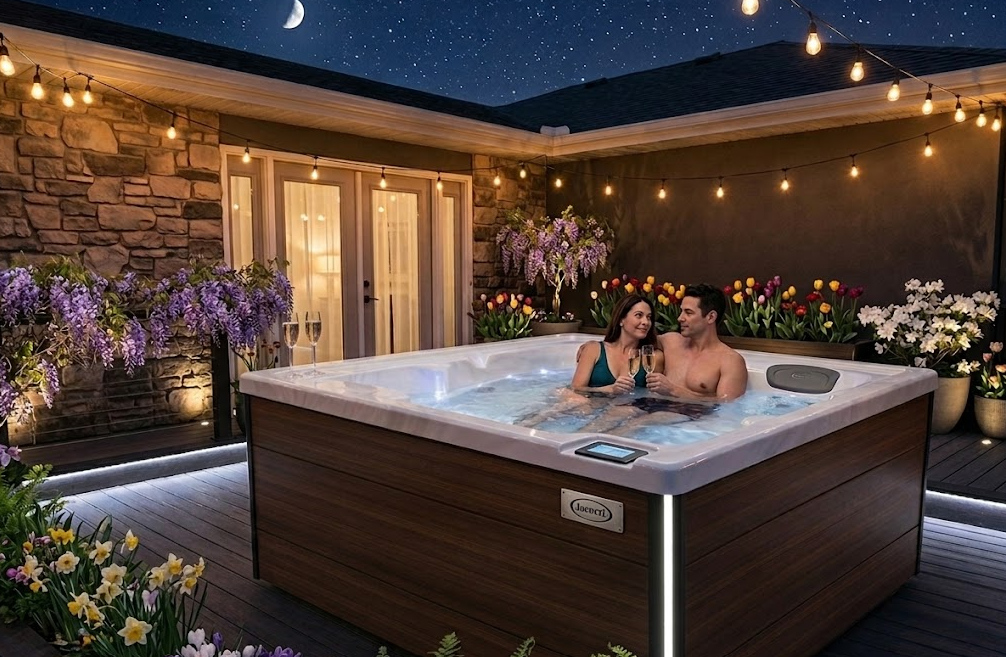
While a swim spa offers both exercise and hydrotherapy features, a dedicated hot tub fills a different and important role in the overall wellness picture. On evenings when you want quiet relaxation rather than an active workout, stepping into a hot tub provides targeted jet massage, intimate seating for two or the whole family, and a calmer sensory environment designed purely for unwinding. Many homeowners find that having this separate space encourages more consistent use of both units, because each serves a clearly defined purpose rather than competing for the same moment in your routine.
Building Your Complete Wellness Space with One Trusted Source
Premium Spas and Billiards carries swim spas, infrared and traditional saunas, and hot tubs under one roof, which simplifies the process of designing a cohesive, coordinated wellness environment. Rather than sourcing products from multiple dealers with different installation timelines and service relationships, homeowners can work with a single knowledgeable team to create a unified space that reflects their goals and their backyard’s layout.
Seasonality also shapes how you engage with each element. Winter is when the sauna earns its place most powerfully, supporting warmth, immune resilience, and that deeply satisfying contrast therapy ritual on cold evenings. Spring and summer invite more active swim spa use for low-impact fitness and family recreation. The hot tub delivers consistent, year-round value as a stress-relief anchor and a gathering point for family connection regardless of the season. Together, these three elements do not simply add features to a home; they represent a long-term lifestyle investment that elevates daily quality of life and adds meaningful appeal to your property for years to come.
Honest Answers to the Most Common Endless Pool Questions
These are the questions buyers ask most often, and they deserve straightforward answers rather than marketing spin.
Is the cost actually worth it? When you spread the investment across five to ten years of use, the numbers shift considerably in your favor. A gym membership averages $40 to $100 per month, a pool club membership can run $100 to $200 monthly, and just two personal training sessions per week at $75 each adds up to $7,800 annually. Over ten years, those recurring costs can easily exceed $50,000 to $80,000, with nothing to show for it at the end. A swim spa purchased in the $25,000 to $50,000 range becomes a fixed asset you own outright, with ongoing operating costs typically landing between $1,000 and $2,500 per year for energy and water care. Frequent users who swim four or more days per week commonly report breaking even within five to six years, after which every session costs you virtually nothing beyond routine maintenance.
How demanding is maintenance, really? Most owners spend roughly 15 to 30 minutes per week managing their water care routine, which covers testing pH and chlorine levels, adjusting chemical balance, and rinsing filter cartridges monthly. A full water change is typically needed once or twice per year depending on usage. The manageable workload comes down to volume: swim spas hold between 1,500 and 2,500 gallons, compared to the 20,000-plus gallons in a traditional inground pool. That smaller volume heats faster, requires fewer chemicals, and drains and refills in a fraction of the time. The chemistry targets are straightforward: pH around 7.5, alkalinity between 80 and 120 ppm, and consistent chlorine levels maintained after each use.
Will it work through winter? Yes, and this surprises many first-time buyers. Well-insulated swim spas with locking thermal covers maintain consistent water temperatures even in climates with hard freezes and heavy snowfall. Owners across the northern United States and Canada regularly use their units throughout winter with no significant efficiency loss. For those in extreme climates or who want zero seasonal compromise, placing the unit indoors in a sunroom, garage, or dedicated wellness room eliminates weather as a variable entirely.
How much yard space do you actually need? Popular mid-range models typically measure around 15 feet by 8 feet, requiring a prepared footprint of roughly 120 to 140 square feet. Beyond the unit itself, plan for approximately two feet of clearance on the sides and three feet at the access end for safe servicing and comfortable entry and exit. A reinforced concrete pad or structurally sound deck capable of supporting 200-plus pounds per square foot is standard.
What about resale value? Traditional inground pools historically recoup 40 to 70 percent of their cost at resale, and they often raise buyer concerns around maintenance liability. Swim spas increasingly appeal to health-conscious buyers who view built-in wellness features as lifestyle assets rather than burdens. In competitive real estate markets, a well-integrated swim spa with quality decking and thoughtful landscaping can meaningfully differentiate a property and attract buyers who might otherwise look elsewhere. Full cost recovery is never guaranteed, but the trend toward wellness-centered home investment strongly supports the long-term case.
Finding the Right Swim Spa Solution for Your Home
Choosing the right swim spa comes down to four practical questions: How do you plan to use it? What is your total available budget, including installation, site prep, and electrical work? How much space do you realistically have? And does your climate demand additional insulation or indoor placement for year-round comfort? Answering these honestly before comparing brands will save you time and prevent costly mismatches between the product and your actual lifestyle.
Endless Pools represents one of the strongest options in a competitive market, particularly for buyers who prioritize current quality and fitness-forward features. However, the best choice is always the one that aligns most closely with your personal priorities, whether that means superior hydrotherapy, family-friendly versatility, or a specific budget threshold. No single brand is the right answer for every household.
That is exactly where a personalized consultation becomes valuable. The team at Premium Spas and Billiards can walk you through swim spas, hot tubs, and sauna options together as a unified home wellness strategy, helping you envision how each element complements the others.
Ultimately, this investment is about building sustainable daily habits around movement, recovery, and relaxation. Take the next step by exploring available models side by side and speaking with a knowledgeable advisor before committing to any single product line.
Conclusion
Choosing an endless pool is a significant investment, but the right information makes the decision far more manageable. To recap the essentials: costs vary widely depending on the model, current system strength, and installation requirements; features like water temperature control and resistance levels directly impact your long-term satisfaction; and alternatives exist that may better match your budget or fitness goals.
Before you commit, take time to request quotes from multiple dealers, test swim in a showroom if possible, and honestly assess your available space and intended use. The perfect endless pool is the one that fits your life, not just your backyard.
Armed with this guide, you are no longer guessing. You are making a confident, informed purchase decision. Take the next step today and turn that vision of swimming on your own terms into a daily reality.