




So you’re thinking about adding a pool table to your game room. You’ve done a little browsing, and you’ve already noticed something: the price gap between slate and non-slate options is pretty hard to ignore. It’s tempting to go with the cheaper option and call it a day. But here’s the thing, that decision is worth a much closer look before you pull the trigger.
A slate pool table isn’t just a premium product with a premium price tag. It’s a fundamentally different playing experience, one built to last decades without warping, shifting, or losing that perfectly level surface you need for a consistent game. And when you stretch the math across 10, 15, or even 20 years of use, the numbers start telling a very different story than the sticker price suggests.
In this post, we’ll break down exactly what separates slate from non-slate surfaces, how climate and moisture play a bigger role than most buyers expect, and how to think about total cost of ownership like a smart, long-term investor. Whether you’re new to billiards or just new to buying a table, this guide will help you make a decision you’ll feel good about for years to come.
The Real Question Isn’t Price, It’s Value Over Time
When most people shop for a pool table, they look at the price tag first. That’s a natural starting point, but it’s the wrong question. The better question is: what does this table cost me per year, across the time I actually own it?
That long-term ownership story is what separates a slate table from a non-slate one. Professional-grade slate tables maintain consistent, level playability across 20 to 30+ years of regular use, while non-slate surfaces are built to a different standard, with a shorter expected lifespan to match.
Non-slate tables do look attractive at first glance. The upfront cost is lower, and they’re widely available as a pool table for sale at big box retailers. That accessibility makes them easy to justify in the moment.
But this decision follows the same logic homeowners apply when choosing between hardwood floors and laminate. Both cover the floor. Only one is infrastructure. The premium material isn’t an indulgence; it’s the choice that holds up, holds its value, and doesn’t need to be redone in five years.
What Makes a Slate Pool Table Different at the Surface Level
So what actually separates a slate table from everything else? It starts with the material itself.
Slate is a dense, fine-grained metamorphic rock that can be precision-ground to tolerances wood and composite surfaces physically cannot reach. World Pool-Billiard Association equipment specifications require that a playing surface stay flat within +.020 inches lengthwise and +.010 inches across width. That level of consistency is simply out of reach for wood or particle board, both of which have natural grain variation and manufacturing inconsistency built in from day one.
Quality billiards pool table models use three-piece slate construction. Three pieces outperform a single slab in two practical ways: each section can be adjusted independently for a truer, flatter playing surface, and the table is far easier to move through doorways and up stairs without damaging the stone.
Non-slate surfaces start at a disadvantage. Wood and particle board respond to changes in temperature and humidity, shifting and losing flatness even before heavy use accelerates the problem.
On a stone bed, every ball rolls true, rebound angles behave predictably, and pocket geometry stays consistent. Casual family players notice this as a smoother, more satisfying game. Serious players notice it immediately.
Here is a telling detail: major professional billiards organizations, including the World Pool-Billiard Association, mandate slate surfaces for sanctioned tournament play. That consensus exists because performance demands it, and it sets a clear baseline for what a quality playing surface actually requires.
Why Moisture and Climate Make Non-Slate a Risky Choice for Game Rooms
That dimensional instability isn’t just a material science concern. It’s a practical problem for the exact spaces where most pool tables actually live.
Basements, finished lower levels, and dedicated game rooms are the most common installation environments, and they’re also the most humidity-prone areas in a home. Temperatures shift with the seasons. Moisture levels rise and fall. For a slate table, none of that matters much. For a non-slate table, it’s a slow countdown.
Here’s why: wood and particle board absorb moisture through their cell walls, expanding as humidity rises and contracting as it drops. That cycle repeats every season. Over time, the playing surface develops high spots, soft zones, and subtle warps that throw off your roll and kill pocket geometry. Releveling can compensate for a table that’s shifted on its legs. It cannot fix a playing surface that has physically changed shape.
Slate, by contrast, is dimensionally inert, its ground surface remains unchanged regardless of seasonal humidity swings.
While no industry-wide failure data quantifies exactly when degradation becomes noticeable, the underlying mechanism, repeated moisture cycling in particle board, is well-documented and recognized across wood-science research.
If you’ve already invested in building or renovating a game room, this matters. The table is the centerpiece. It’s not the place to cut corners on durability.
Longevity and Warranty Coverage: What the Numbers Actually Tell You
Slate’s dimensional stability, established above, compounds into a clear longevity advantage, and manufacturers’ own warranty terms reflect this.
Premium slate manufacturers typically offer substantially longer warranty terms than budget non-slate producers, a signal worth examining before purchasing. That gap isn’t coincidental. Manufacturers warrant products to the lifespan they actually expect, so shorter coverage is a quiet signal that the surface has real limits.
Think of warranty length as a proxy for how long the product was designed to last, not just how long the company will cover repairs.
Ongoing maintenance for a slate table is real but manageable. Felt typically needs replacing roughly every ten years depending on play frequency, and professional releveling is occasionally needed after moving or settling. Neither service is prohibitively expensive, and both restore the table to like-new performance.
Unlike slate, non-slate surfaces cannot be serviced back to spec once warped, replacement is the only remedy.
Total Cost of Ownership: Running the Numbers Over 20 Years
So what does all of this actually look like in dollars?
A quality slate pool table runs $4,000 to $6,000 upfront. Non-slate tables are typically available in the $800–$1,500 range at big box retailers, though this is approximate and varies by retailer. The gap feels significant until you run the full 20-year picture.
The non-slate scenario: Budget tables typically need replacement every 7 to 10 years. One or two replacements over two decades, plus delivery, accessories, and felt costs each time, can push total spending well past what a single slate table would have cost. You spend more, and you end up with less.
The slate scenario: One purchase. Periodic felt replacement, confirm current service rates with your local installer. Occasional professional releveling. The table holds its form and plays consistently throughout, with no degradation forcing a replacement.
Resale value shifts the math further. Slate tables hold meaningful resale value and are actively traded on the secondary market, while non-slate tables are genuinely difficult to resell, often ending up donated or discarded.
The sticker price also becomes more manageable than it looks. Financing options are widely available, and spreading a $4,000 to $5,000 purchase over time reframes the monthly cost against years of daily use. What feels like a premium purchase becomes a modest, long-term investment in your home.
When a Non-Slate Table Actually Makes Sense
All of that said, slate isn’t the right choice for every situation, and there’s no reason to pretend otherwise.
Non-slate tables make genuine sense in a few specific scenarios. If you’re a renter who moves every couple of years, investing in a heavy, permanent slate table doesn’t fit your lifestyle. If your kids are young and you want something to get them started, a budget-friendly non-slate table can absolutely deliver a few years of casual fun without a major commitment. And if your budget has a hard ceiling right now, a non-slate table beats having no table at all.
The key is knowing what you’re buying. A decent non-slate table, kept in a climate-controlled, low-humidity room, can hold up reasonably well for casual play. The risks covered earlier are real, but they’re not instant. In a stable environment with light use, you may get several good years out of it.
Where non-slate becomes a real compromise is when the goal is permanence. If you’re finishing a basement, designing a dedicated game room, or buying a table you expect to still be playing on in ten years, non-slate tends to reveal its limitations gradually. Warping, uneven roll, and surface degradation aren’t dramatic failures; they’re slow, subtle declines that eventually make the table frustrating to play on.
The honest bottom line: non-slate is a starter option or a temporary solution. It’s not a foundation for a space you’re building to last.
What to Look for When Choosing a Slate Pool Table
Once you’ve decided slate is the right call, knowing what to look for separates a great purchase from a regrettable one. Here’s a practical checklist worth keeping in mind.
Three-piece slate construction is the specification to confirm first. Three-piece slates can be individually leveled and adjusted, which matters enormously in finished rooms where floors are rarely perfectly even. One-piece slate is heavier, harder to maneuver through doorways, and offers no adjustment flexibility once it’s down.
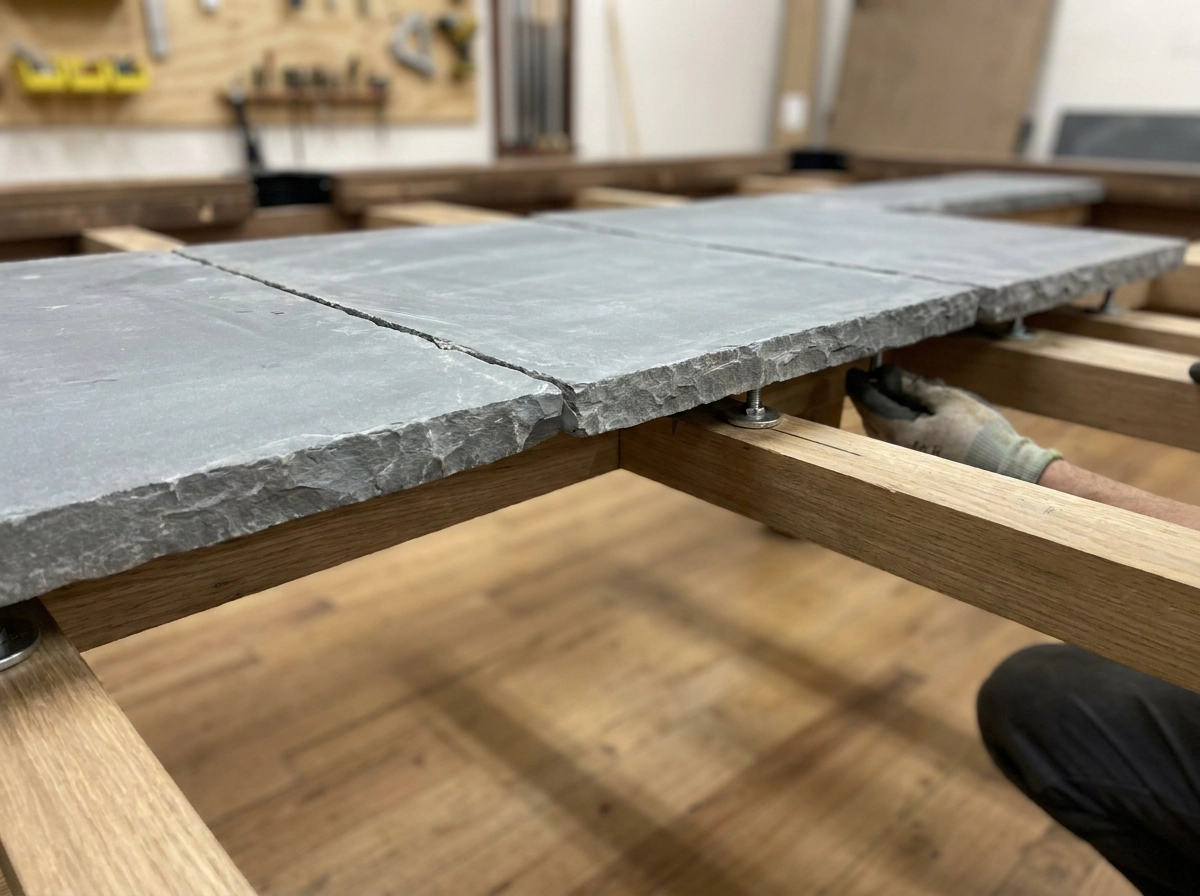
Slate thickness is the next number to check. The WPA specifies a minimum of one inch for tournament play; for home tables, one-inch slate is the benchmark to prioritize at mid-to-premium price points. The added mass improves stability and reduces any flex over time.
Don’t overlook the frame and legs. A quality slate surface deserves matching construction underneath. Look for hardwood frames, dovetail rail joints, and solid wood legs. These details signal that the table was engineered as a complete system, not assembled from mismatched components.
Felt quality completes the package. A heavy-duty wool-nylon blend cloth, paired with your slate surface, is what produces that smooth, consistent ball roll. The slate sets the foundation; the felt determines how it actually plays.
When evaluating slate tables at a premium billiards retailer, ask specifically about the manufacturer’s slate sourcing, warranty terms, and installation support, these details vary significantly across product lines.
Thinking About Your Game Room as a Long-Term Space
Once you’ve confirmed the right specs, zoom out for a moment. A game room is a commitment, not a purchase. If you’ve renovated a basement, designed a dedicated space, or invested in complementary pieces like a bar, seating, or game room furniture, you’re building something meant to last decades, not seasons.
Think of the slate pool table the way you’d think of a quality sectional in your living room. The anchor piece sets the standard for everything around it. A well-chosen slate table elevates the entire room; a surface that warps or plays unevenly over time quietly drags it down.
At Premium Spas & Billiards, the slate pool table selection spans a wide range of styles and price points. Whether you’re looking for an approachable entry-level slate table or an heirloom-quality piece designed for a high-end game room aesthetic, there’s a fit for your space and your budget.
The buying experience matters just as much as the table itself. Professional delivery, leveling, and installation mean your table plays perfectly from the first break, and stays in calibration through years of regular use. That kind of setup isn’t just convenient; it protects the investment.
The slate table may or may not be the most expensive item in your game room. It is, without question, the most important one. It’s the piece that determines whether people actually gather, play, and come back. Get that right, and everything else in the room gets better around it.
Is a Slate Pool Table Worth It? Here’s the Short Answer
So, is a slate pool table worth it? For anyone building a game room that’s meant to last, the honest answer is yes, and not because slate is the luxury choice. It’s because slate is the practical one.
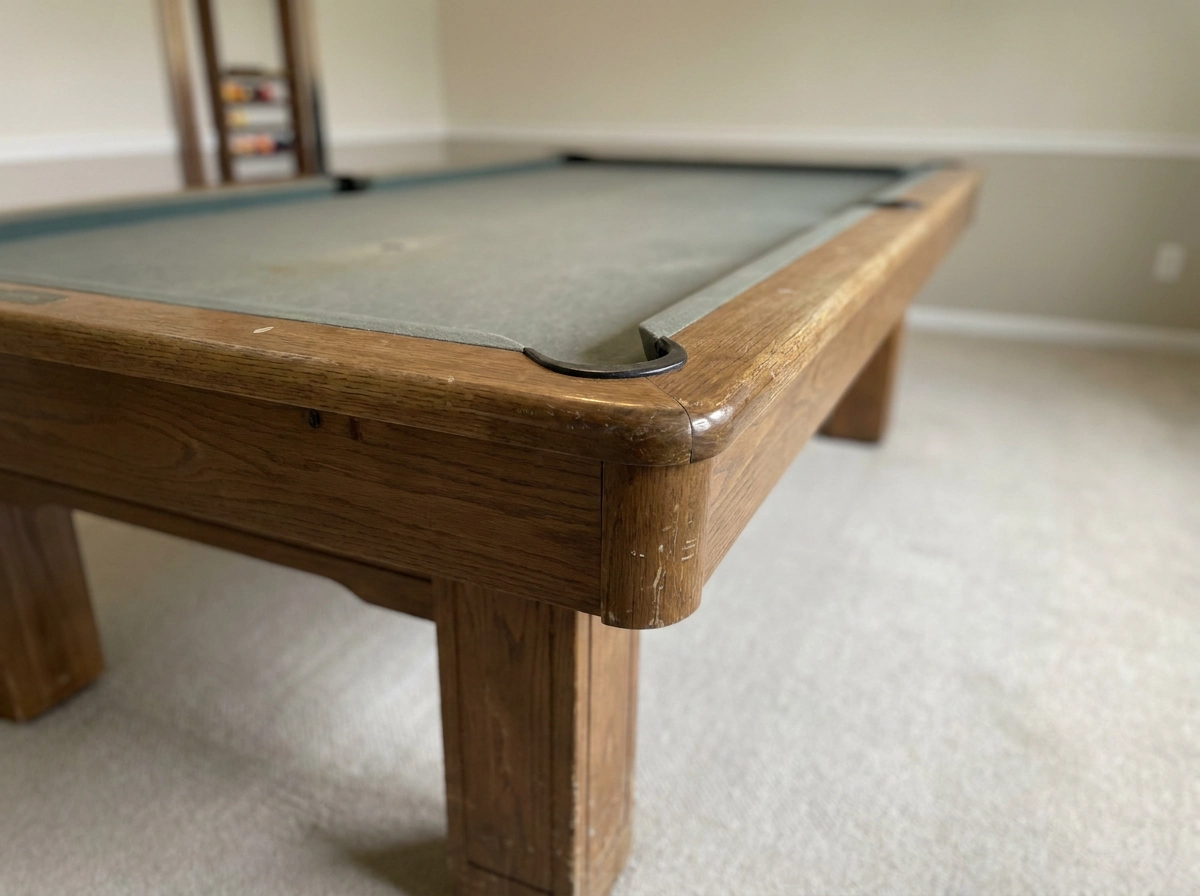
As the 20-year cost comparison shows, slate’s higher upfront price translates to lower total cost once replacements, resale value, and maintenance are factored in.
If you’re still on the fence, the best thing you can do is see one in person. Playing on a slate surface makes the difference immediately obvious in a way that reading about it simply can’t. The ball rolls true, the table feels solid, and the hesitation tends to disappear.
That’s exactly where the team at Premium Spas and Billiards comes in. Their curated selection of slate pool tables spans a range of styles and budgets, and their specialists can help you find the right fit for your space without the guesswork.
The best game rooms are the ones that get used and enjoyed for years. That kind of staying power starts with choosing the right foundation, and with slate, you’re choosing one that’s built to last.
Conclusion
Slate’s advantages, performance, longevity, and long-term value, hold up across every dimension examined in this guide.
Your game room deserves a foundation that rewards every year you put into it. A slate pool table delivers that, practically and financially.
Ready to see the difference for yourself? Visit Premium Spas and Billiards to explore their curated slate pool table selection and get expert guidance tailored to your space and budget. The right table is out there; the only thing left is finding it.